
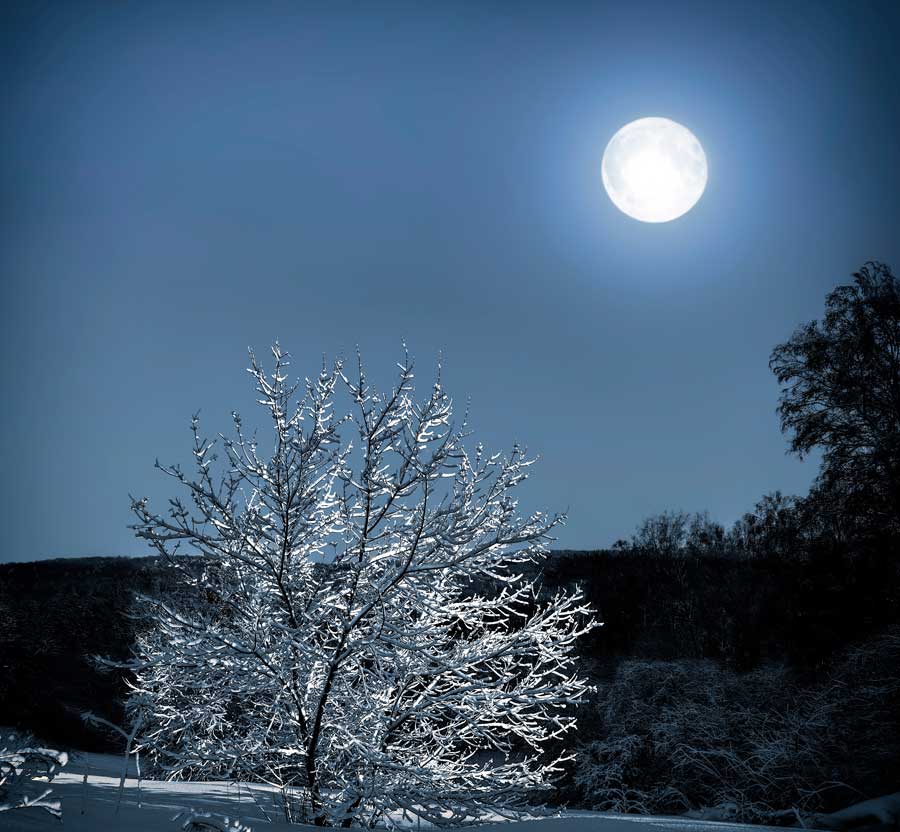
Waawiita Kiilhswa “Lost Moon” is a correcting lunar month that is added to the end of the Peewaalia lunar year on a repeating cycle. The cycle begins when Waawiita Kiilhswa first appears; after that first year, he returns 3 years later, again 3 years after that, and then 2 years after that, before the 3-3-2 pattern starts over. This correcting lunar month is always placed at the end of the lunar year, immediately after Eehsipana Kiilhswa “Raccoon Moon,” when everything is dormant.
Although Waawiita Kiilhswa is not tied to a specific ecological event, he is still a critical ecological month for keeping our calendar in step with the land. Adding Waawiita Kiilhswa to the Peewaalia lunar year makes sure that ecological ties and occurrences stay in their proper moons. Maintaining these alignments and connections of seasonal and ecological happenings is important both for our Peewaalia community and for the Peewaalia lunar calendar itself.
Pahsaahkaahkanka neepinwiki “summer solstice” serves as the fixed anchor point in our lunar calendar and must remain within the month of Aciikatakiilhswa “Hilling the Corn Moon.” When Pahsaahkaahkanka neepinwiki begins to fall near the end of Aciikatakiilhswa, we know Waawiita Kiilhswa must be added to the end of that lunar year. In those years, the Peewaalia lunar year has 13 moons. Waawiita Kiilhswa will not occur in the 2026 Peewaalia lunar year.